Concrete footings
Underground concrete bases for decks, additions, retaining walls, and accessory structures - sized and reinforced for Redlands soil and seismic requirements.
Learn More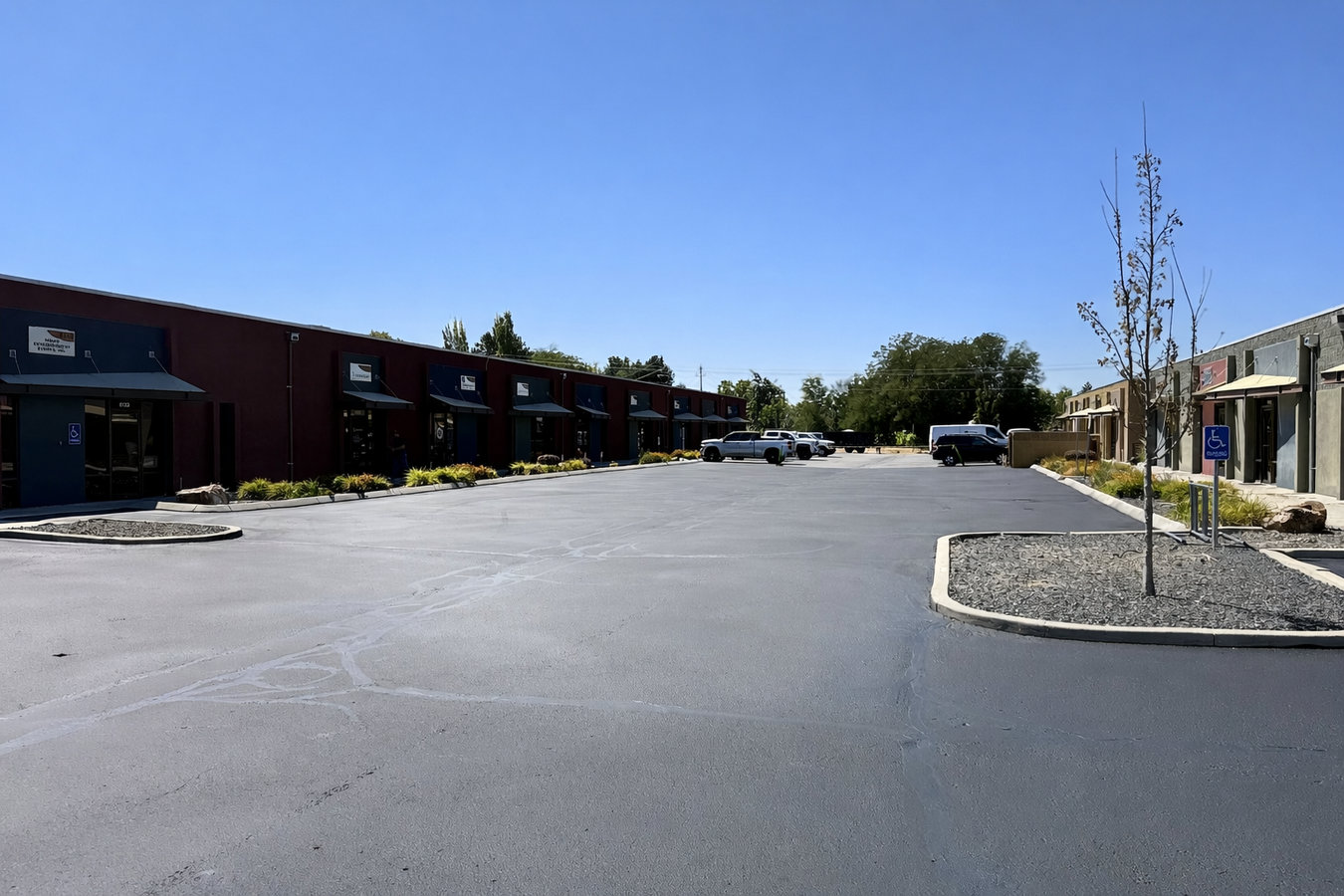
A cracked, uneven parking surface drives customers away and invites liability. We build concrete parking lots in Redlands designed for local clay soil, the Inland Empire heat, and the City of Redlands permit process - from first call to final inspection.
Concrete parking lot building in Redlands, CA covers the full sequence from demolishing the existing surface through grading, base compaction, forming, the reinforced slab pour, broom finish texturing, and control joint cutting - most residential and small commercial lots take 3 to 7 days of active work, with a 7-day vehicle exclusion period after the pour.
Redlands homeowners and business owners run into the same recurring problem: a parking surface that looked fine for a few years and then started cracking, pooling water, or shifting underfoot. In most cases, the failure traces back to the base preparation - specifically, a contractor who skipped proper soil compaction or used a base layer that was too thin for the clay-heavy soils common throughout the Inland Empire. Patching a poorly built lot only delays the same failure. A proper rebuild, done right from the beginning, is the only lasting solution.
If your property is also adding a new structure or expanding its footprint, parking lot work is sometimes coordinated alongside a concrete footing installation or a full driveway build under a single permit application.
If you have filled cracks in your parking area before and they keep reappearing - especially in a spiderweb or map pattern - the surface underneath is failing, not just the top layer. In Redlands, this pattern is often caused by the clay-heavy soil shifting through wet and dry seasons, which no amount of patching will permanently fix. At that point, a full replacement with a properly prepared base is the only lasting solution.
Standing water on a parking surface is a sign that the slope is wrong or the surface has settled unevenly. In Redlands, where heavy rain can arrive suddenly after long dry periods, pooling water accelerates surface damage and creates a slip hazard. If you notice puddles that take hours to disappear after rain, the drainage design of your current surface needs to be addressed.
When the top layer of concrete starts to peel or flake off - a condition called spalling - it means the surface has been compromised by moisture, heat cycles, or age. Redlands' intense summer sun and occasional winter frost at its 1,300-foot elevation can speed up this process. Once spalling starts, it tends to spread, and patching only delays the inevitable.
If you can feel bumps, dips, or a rocking sensation when pulling into your parking area, the slab has shifted or settled unevenly beneath the surface. This is more than a cosmetic issue - uneven surfaces can damage vehicle tires and suspensions over time and create tripping hazards for anyone walking across the lot. An uneven surface that was once level is a clear sign the base layer has failed.
We build concrete parking lots for residential properties, small commercial sites, and multi-unit buildings throughout Redlands and the surrounding Inland Empire. Every project starts with a free on-site visit - we walk the area, check how water flows across the site, and assess the existing surface before giving you any numbers. This is the only way to quote a parking lot accurately, and any contractor who prices without seeing the property is guessing. We handle the full City of Redlands permit process, including the pre-pour inspection, so you never have to navigate city hall yourself. If your project also needs a concrete footing installation for a new structure, we can coordinate both scopes under a single permit.
Every lot we build includes a properly compacted crushed-rock base layer, steel reinforcement embedded in the slab, a broom finish for traction, control joints cut in a grid pattern to manage thermal movement, and a drainage slope designed to move water away from your building. For properties with clay-heavy soil - which is common throughout Redlands and the broader Inland Empire - we use a base layer specification that accounts for seasonal soil movement. If you are adding a new structure or expanding an existing parking area, we also handle the demolition of the old surface and all associated debris removal. And if you are looking at a larger hardscape project that includes a new concrete driveway alongside the lot, we can combine both into one project.
For properties converting a gravel, dirt, or asphalt area into a permanent concrete surface. Full base prep, forming, pour, and permit management included.
For existing concrete or asphalt lots that have failed and need a full rebuild. Demolition, hauling, base prep, and new pour handled as one project.
For properties adding additional stalls or extending an existing surface. Matched to the existing grade and drainage design to ensure the whole lot functions as one unit.
Redlands has a mix of older commercial properties near the historic downtown district and newer residential and commercial development along the north and east sides of the city. Older properties often have existing concrete or asphalt that needs full demolition before a new lot can be built, and some of those older surfaces were installed without the drainage slopes or base depths that current standards require. A site visit before any quote is not optional here - it is essential. Beyond site conditions, Redlands' clay soils create a base-preparation challenge that contractors unfamiliar with the Inland Empire regularly underestimate. The California Geological Survey maps the expansive soil zones that affect much of San Bernardino County, and that data informs how we specify the base layer for every parking lot we build in the area. We also serve Rialto and other neighboring communities where the same soil and climate conditions apply.
Redlands summers regularly push past 100 degrees, and freshly poured concrete that dries out too quickly on the surface before hardening underneath will crack within weeks. This is one of the most common failure modes for parking lots in the Inland Empire, and it is entirely preventable. We schedule pours for the cooler morning hours during summer, use curing blankets or misting on hot days, and follow the hot-weather concreting practices recommended by the American Concrete Institute. Our work in San Bernardino and across the wider Inland Empire has given us direct experience managing these conditions on every pour, every season.
We come to your property, walk the area, and assess the existing surface and soil before giving you any numbers. This visit is free and takes 20 to 45 minutes - it is the only way to give you an accurate quote. We reply to all new inquiries within 1 business day.
Once you approve the estimate and sign a contract, we apply for the required permit from the City of Redlands Building and Safety Division. Permit approval typically takes a few days to a couple of weeks. We handle every step - you will not need to contact the city yourself.
On the first day of active work, we remove the existing surface, haul away debris, grade the soil to the correct drainage slope, and compact a base layer of crushed rock. This base is where the long-term performance of your lot is determined - we do not rush it.
Concrete is delivered by truck, poured into the forms, leveled, and broom-finished for traction. Control joints are cut in a grid pattern. The city inspection is scheduled and passed before we close out the project. You will need to keep vehicles off for at least 7 days after the pour.
Free on-site estimate, full permit handling, no surprise charges.
(909) 546-5311We apply for the City of Redlands Building and Safety Division permit before any demolition or base prep begins. That means the city inspection is scheduled and on record, and you have documentation that your lot was built to current standards - which matters when you sell the property or file an insurance claim.
Redlands has clay-heavy soils in many neighborhoods, and we assess each site before specifying the base layer depth and material. A base that is too thin for the soil conditions will fail regardless of how good the concrete pour is. We have seen the results of shortcuts here - and we do not take them.
We schedule summer pours for the early morning hours and use curing blankets or misting on days when afternoon temperatures climb past 90 degrees. This is standard practice for experienced Inland Empire contractors, and it is the difference between a lot that holds up and one that surface-cracks within the first season.
You will receive a written estimate before any work begins that breaks down demolition, base prep, the pour, drainage slope design, and cleanup as separate line items. If something changes during the project, we tell you before we act on it. No surprise items on the final invoice.
Parking lot work is one of those jobs where the difference between a contractor who knows the Redlands area and one who does not shows up fast - usually in the first wet season after the pour. Our permit record, on-site assessments, and soil-specific base specs are the concrete details that separate a lot built to last from one built to patch.
Underground concrete bases for decks, additions, retaining walls, and accessory structures - sized and reinforced for Redlands soil and seismic requirements.
Learn MoreResidential driveway construction from the street apron to the garage, including base prep, reinforcement, and control joints designed for Inland Empire conditions.
Learn MorePour slots fill up before peak summer heat - contact us now to lock in your project date and avoid a wait.