Foundation raising
Lifting and re-leveling existing foundations in Redlands that have settled or shifted over time - assessed and permitted through the City of Redlands.
Learn More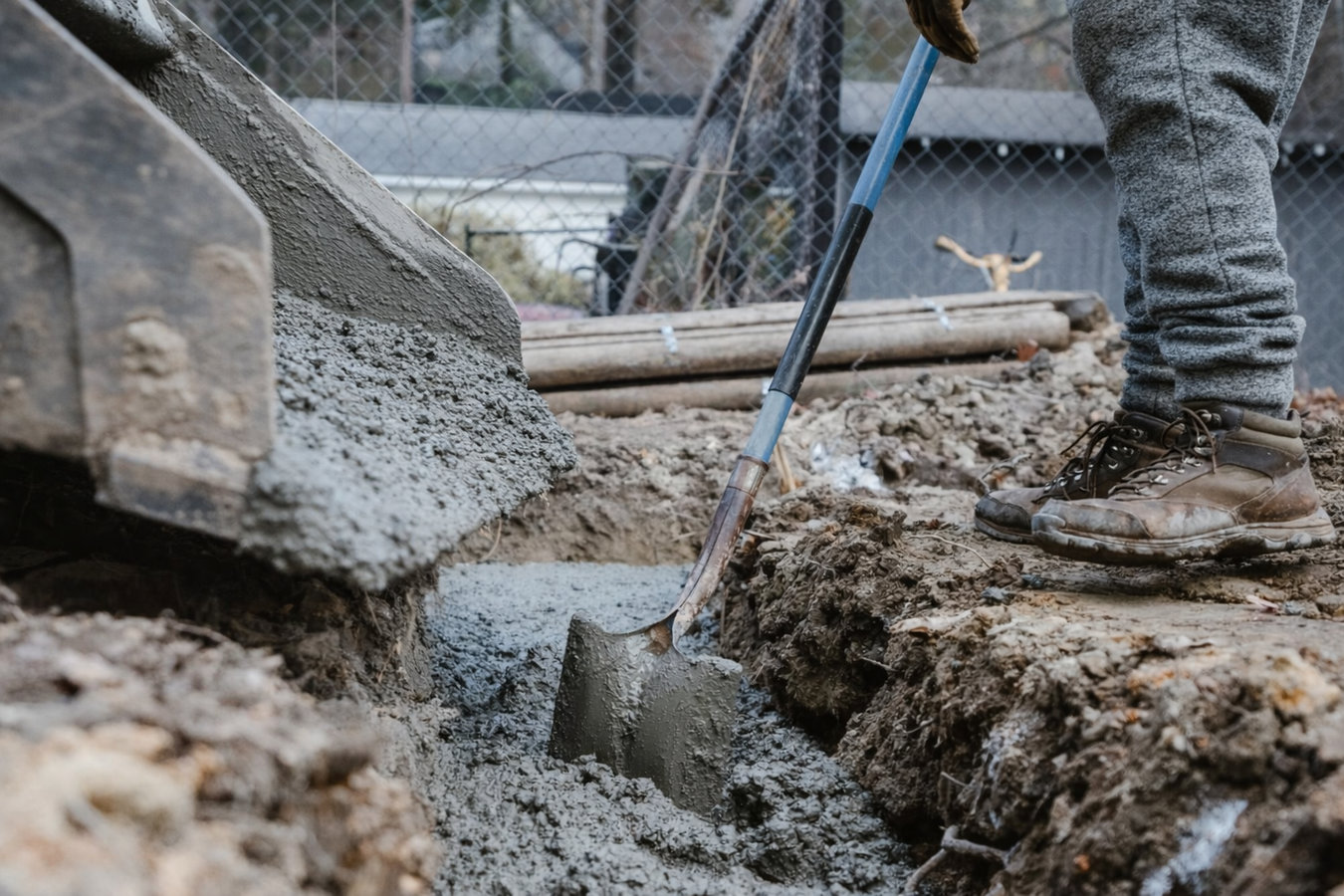
Everything you build above ground depends on what is buried beneath it. We install concrete footings in Redlands designed for local clay soil, seismic requirements, and the City of Redlands permit process - so your deck, addition, or retaining wall starts on solid ground.
Concrete footing installation in Redlands, CA covers excavating to the required depth, placing steel reinforcing bars, scheduling the required City of Redlands pre-pour inspection, pouring and finishing the concrete, and managing the curing period - most residential footing projects take one to two days of active work, with a four-to-six-week total timeline when permit review and curing are included.
Redlands homeowners planning a deck, room addition, or retaining wall often do not realize that the footing is where the project either succeeds or fails. A footing poured too shallow, or poured into loose soil without adequate reinforcement, will shift over time - and you will see it first in doors that stick, gaps that open up, or walls that start to lean. In Redlands, the clay-heavy soils common throughout the Inland Empire add a specific challenge: they expand when wet and contract when dry, putting repeated stress on footings that were not designed with that movement in mind.
For larger projects, footing work is often the first step in a sequence that includes a full foundation installation or a foundation raising for an existing structure - both of which we can assess and coordinate as part of the same project.
If you see diagonal cracks spreading from the corners of doors or windows - inside or outside the house - that is often a sign the foundation or footings below are shifting. In Redlands, this can happen when the clay-heavy soil goes through repeated wet and dry cycles over the years, slowly moving the ground beneath older footings. It does not always mean a crisis, but it does mean a professional should take a look before the movement gets worse.
When footings shift, the frame of the house moves with them - and the first place you usually notice it is a door that suddenly sticks, a window that will not latch, or a gap that appears at the top of a door frame. This is especially common in Redlands homes built before the 1970s, when footing depths and reinforcement standards were less stringent. If this is happening in multiple spots around your home, it is worth having a contractor assess the foundation.
Any new structure that carries weight - a room addition, a covered patio, a deck, or a retaining wall over a couple of feet tall - will require new footings before construction can begin. This is not optional; the City of Redlands will require it as part of the permit process. If you are in the planning stage for any of these projects, footing work is part of the package.
Redlands gets most of its rainfall between November and March, and if water consistently pools against your foundation or near a retaining wall after rain, it is soaking into the soil and accelerating the expand-and-contract cycle that stresses footings. Over time, this can undermine even well-built footings. Addressing the drainage issue and inspecting the footings at the same time is a smart move.
We install concrete footings for decks, room additions, retaining walls, accessory dwelling units, detached garages, and other residential structures throughout Redlands and the surrounding Inland Empire. Every project starts with a free on-site assessment - we look at the soil, the slope of the site, the structure you are planning to build, and any existing construction that might affect the footing design. That assessment is what drives the depth and reinforcement specification, and we do it before we quote anything. We handle the complete City of Redlands permit process, including the required pre-pour inspection, which means a city inspector physically confirms the excavation depth and reinforcement are correct before any concrete is poured. If your project is also connected to a foundation raising or a broader foundation installation, we can coordinate both scopes together.
We also work on older Redlands properties where the challenge is not a new structure but a failing or inadequate existing footing. Redlands has a significant number of homes built between the 1920s and 1960s, many of which have had additions or outbuildings added over the decades - sometimes on footings that did not meet the depth or reinforcement requirements that are standard today. If an excavation reveals a surprise, we explain what we found and what it means for your project before we proceed. You stay in control of the scope and the budget throughout.
For decks, room additions, detached garages, and ADUs. Site assessment, reinforcement design, permit handling, and pre-pour inspection coordination included.
For concrete or block retaining walls over a couple of feet tall. Designed to handle lateral soil pressure, with seismic reinforcement built to Redlands requirements.
For older Redlands properties where existing footings have shifted, settled, or no longer meet current code. Site investigation before any pricing.
Redlands sits in a seismically active part of Southern California, and California's building code requires footings here to include reinforcement and connection details that are specifically designed to handle ground movement during an earthquake. A contractor who is not familiar with Inland Empire requirements may use a reinforcement spec that passes inspection elsewhere but does not meet what Redlands inspectors are checking for. The California Geological Survey seismic hazard zone maps confirm that Redlands falls within mapped hazard zones - and those maps are part of what the city uses when reviewing permit applications for structural work. We serve homeowners in Yucaipa and across the Inland Empire where the same seismic and soil conditions apply.
The clay soils common throughout much of Redlands add a second layer of complexity. Clay expands when it absorbs rainfall and contracts during the long dry summers, and that seasonal movement is one of the primary reasons older footings in this area fail over time. Homes near the historic downtown district and the neighborhoods around the University of Redlands tend to have the oldest footings - many of which were poured before current depth and reinforcement standards applied. For projects on those properties, we assess the existing conditions carefully before recommending a scope of work. The City of Redlands Building and Safety Division is the permitting authority for all footing work in the city, and we have an established process for working through their review and inspection requirements efficiently. We also serve homeowners in Loma Linda, where the same soil profile and permit framework apply.
We start with a 10- to 15-minute call to understand your project, then schedule a free on-site visit before giving you any price. Footing work is hard to quote accurately without seeing the soil and the site. We reply to all new inquiries within 1 business day.
We apply for the building permit through the City of Redlands Building and Safety Division before any digging starts. This takes one to three weeks depending on the city's workload and the complexity of your project. We handle every step - you will receive a copy of the permit once it is issued.
The crew digs to the required depth, sets the steel reinforcing bars in place, and then waits for the city inspector to confirm the work matches the approved plans. This pre-pour inspection is required before any concrete can go in - it is the system working the way it is supposed to.
Once the inspection is approved, concrete is poured, leveled, and finished. Plan on at least seven days before significant construction begins on top of the footing, and up to 28 days for full strength. During Redlands' hot summers, we cover or mist new footings to slow the drying process and protect the cure.
Free on-site assessment, permit handled for you, no surprises mid-project.
(909) 546-5311The City of Redlands requires a city inspector to physically check the excavation depth and rebar placement before any concrete is poured. We schedule this inspection as a standard part of every footing project, and we build our timelines around it. You get documented proof that the work was done to code before it is buried forever.
The clay-heavy soils common in Redlands neighborhoods expand and contract with the seasons. We assess each site before we specify footing depth or reinforcement, so the design is matched to what is actually under your property - not a default that works somewhere else. An honest site assessment is how we avoid surprises mid-project.
Redlands sits in a mapped seismic hazard zone, and California's building code sets specific reinforcement and connection requirements for footings in this area. We build to those requirements on every project - not as an upgrade, but as a baseline. The city inspector verifies this before the pour, and we welcome that check.
Concrete poured in Redlands' summer heat can dry out too fast on the surface, creating hidden weaknesses before the slab reaches full strength. We schedule summer pours for early morning and use misting or curing covers during the first week. A footing that cures correctly is as strong as it is supposed to be - one that does not is not.
Footing work is invisible once the project is done - which is exactly why it has to be done right the first time. Our permit record, site-specific soil assessments, and seismic reinforcement approach are the practices that protect your investment long after the concrete is poured.
Lifting and re-leveling existing foundations in Redlands that have settled or shifted over time - assessed and permitted through the City of Redlands.
Learn MoreFull residential and commercial foundation installation in Redlands, including soil assessment, seismic reinforcement, and complete permit management from application to final inspection.
Learn MorePermit slots fill up in spring - reach out now to get your project on the schedule before the busy season starts.